Återställande av lumen

Godartad förträngning av de centrala luftvägarna

  • Risken för perforation och fördröjd stenos är praktiskt taget obefintlig vid kryodevitalisering.

  • Endobronkiell kryobiopsi av slemhinnan ger ett högre innehåll av submukosal vävnad, körtlar och glatt muskulatur, samt bättre bevarande av epitelets morfologi jämfört med biopsier med biopsitång.

  • Effekterna av kryoterapi på mikrocirkulationen inkluderar vasokonstriktion, endotelskada och trombocytaggregation; dessa leder till bildning av mikrotrombi och efterföljande nekros.

  • Endobronkiella kryobiopsier av slemhinnan kan tas i öppenvården.

  • APC erbjuder en snabbare inlärningskurva och en bättre säkerhetsprofil än laserablation.

Vetenskaplig information

Summary of publication

Inaty, Hanine et al: Unimodality and Multimodality Cryodebridement for Airway Obstruction. A Single-Center Experience with Safety and Efficacy. Annals of the American Thoracic Society 13 (6), S. 856–861.


This retrospective study reports effective and safe use of flexible cryoprobe (reusable, 2.4mm) for airway recanalization in 156 patients with malignant (n=88) and benign (n=68) airway obstruction. Cases of benign airway obstruction included blood clots (n=11), mucus plugs (n=1), granulation tissue (n=40), and benign tumors (n=6). Cryorecanalization achieved bronchoscopic airway patency in 95% of patients. For those with benign airway obstruction, complete or partial airway patency was accomplished in 56 (82%) and 9 (13%) of 68 patients, respectively. Improvement in symptoms occurred in 118 (82%) of 144 symptomatic patients. Serious complications were reported in 17 patients (11%) and included respiratory distress, severe bleeding, airway injury, and hemodynamic instability. The authors concluded that “Cryodebridement, when used alone or in combination with other endoscopic treatment modalities, appears to be safe and effective in treating endoluminal airway obstruction.”


Läs studien

Summary of publication

Jung, Ye-Ryung et al: Recurred Post-intubation Tracheal Stenosis Treated with Bronchoscopic Cryotherapy. In: Internal medicine (Tokyo, Japan) 55 (22), S. 3331–3335.
 

This case reports on a 42-year-old woman with recurring post-intubation tracheal stenosis that was successfully treated with bronchoscopic cryotherapy (reusable, 2.4mm). She had a history of endotracheal intubation for three weeks, after which she experienced postintubation tracheal stenosis so that tracheal resection with end-to-end anastomosis was performed. Three weeks after the operation, recurrent tracheal stenosis was recognized that had formed as web-like fibrosis above the previous anastomosis site in the upper trachea. As her general condition was unfavorable for repeat surgery, cryotherapy with flexible bronchoscopy was performed. The patient experienced no immediate complications and after one month, airway patency was consistently well maintained and the patient was stable without dyspnea, stridor, or wheezing. Tracheal CT taken two years after cryotherapy showed no further stenosis at the old lesion site. The authors concluded that “Cryotherapy can be considered as an alternative or primary treatment for post-intubation tracheal stenosis”.
 

Läs studien

Produkter för denna åtgärd

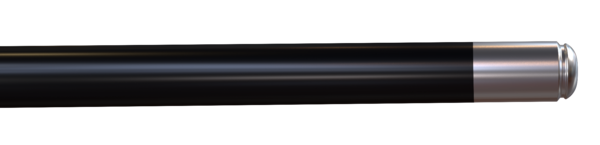
Close-up of the tip of a flexible cryoprobe with a diameter of 2.4 mm for pulmonary procedures

Nr 20402-411

Flexibel engångskryosond, Ø 2,4 mm, längd 1 150 mm

Close-up of the tip of a flexible cryoprobe with a diameter of 1.7 mm for pulmonary procedures

Nr 20402–410

Flexibel engångskryosond, diameter 1,7 mm, längd 1 150 mm

Close-up of the tip of a flexible cryoprobe with a diameter of 1.1 mm for pulmonary procedures

Nr 20402-401

Flexibel engångskryosond, diameter 1,1 mm, längd 1 150 mm, med skyddshylsa, längd 817 mm, med skyddshylsa, diameter 2,6 mm

Mer produktinformation


  • Den 2,4 mm stora sonden ger dig det största frysområdet av alla engångskryosonder